Reality Labs R&D Prototypes
Interaction prototypes across haptics, wearables, EMG, and robotics
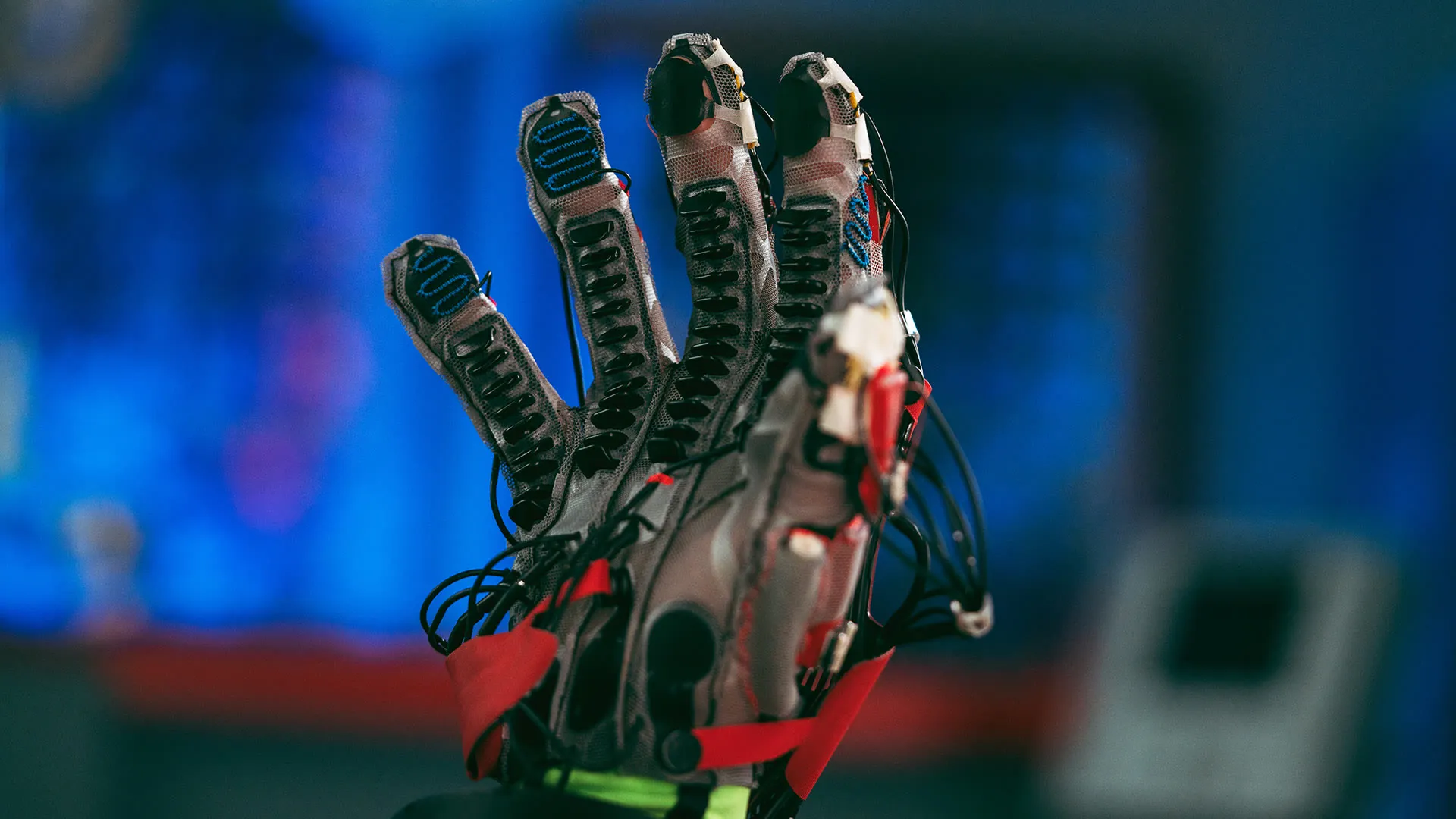
summary
Reality Labs Research develops consumer technologies years ahead of what’s commercially available: haptic wearables, neural input, and robotics, to name a few. However, that research can’t exist in isolation. Without a clear sense of the potential user value, it struggles to attract funding or find a path into a product.
Interaction prototyping bridges that gap. A rough build is a cheap way to test a value hypothesis and put the technology into a concrete, user-centric scenario. These prototypes can then inform decisions about where the research heads next and become powerful artifacts for communicating the work outside of the team.
If a picture is worth a thousand words, a prototype is worth a thousand meetings.
my role
As a prototyper, I turned early research concepts into tangible experiences people could actually try. I collaborated with research scientists, engineers, and designers to build prototypes that supported value exploration, user studies, executive reviews, and conference demos.
Over four years, I worked on 15+ projects spanning haptics, wearables, EMG (electromyography), and robotics — each a unique problem space with its own tech stack and open questions. As the work matured, so did my role. I elevated findings from individual demos into strategic planning, built code libraries and documentation to up-level the team’s prototyping practice, and disseminated the work through conference talks and workshops.
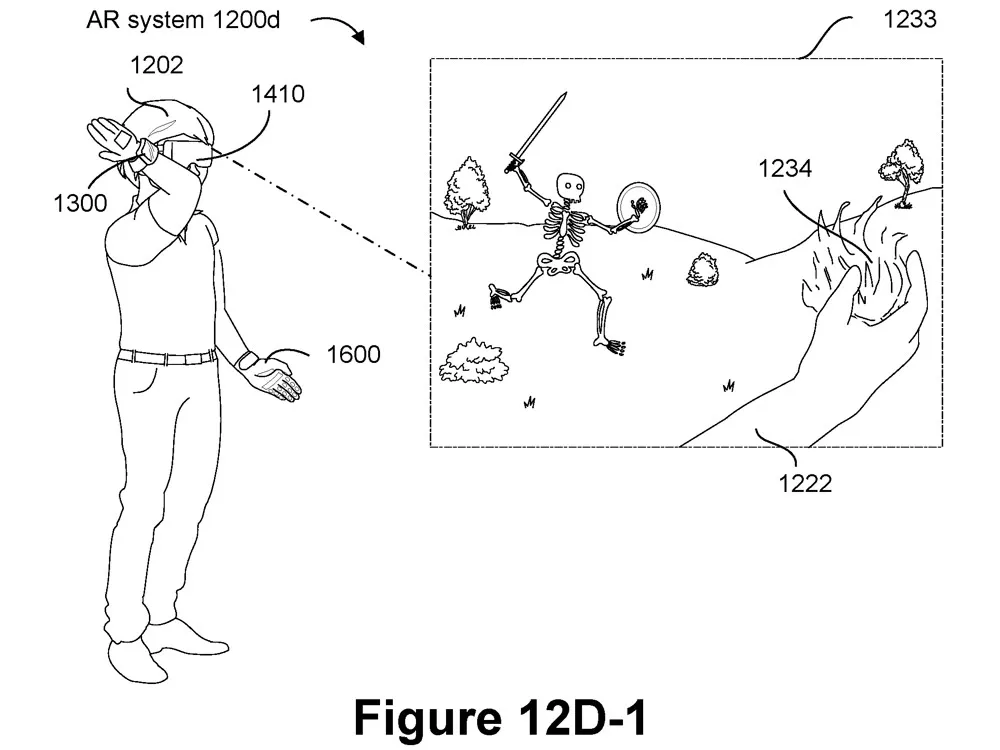
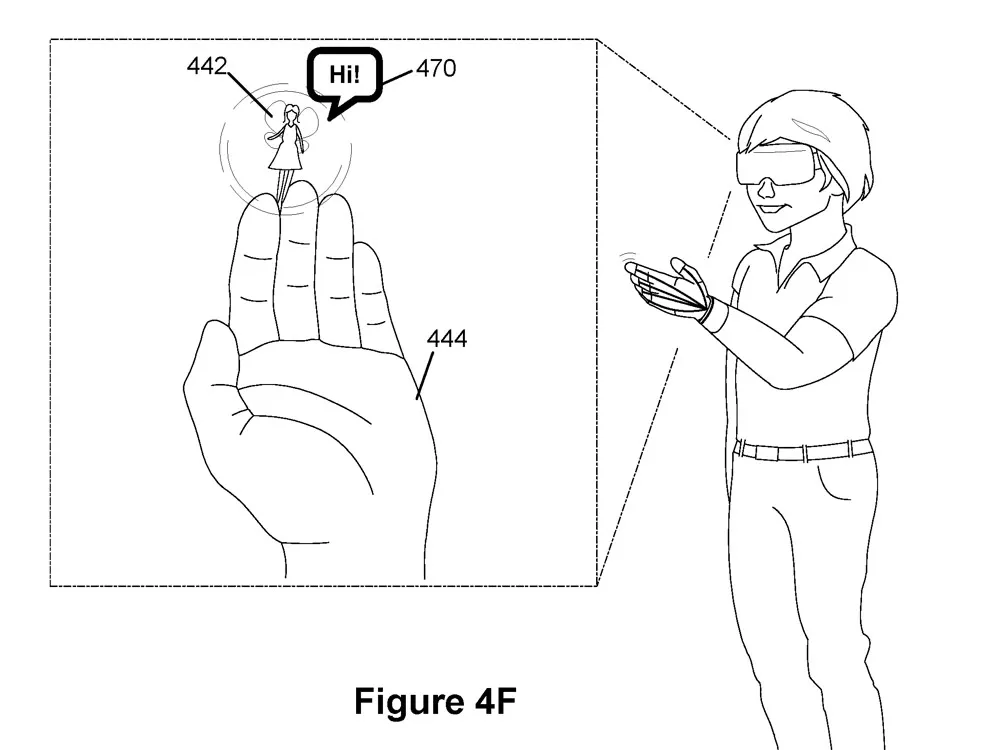
The diagrams below are very representative of the types of experiences I would build with research hardware:
public demos
These two projects reached conference audiences outside Meta and are direct examples of my contributions.
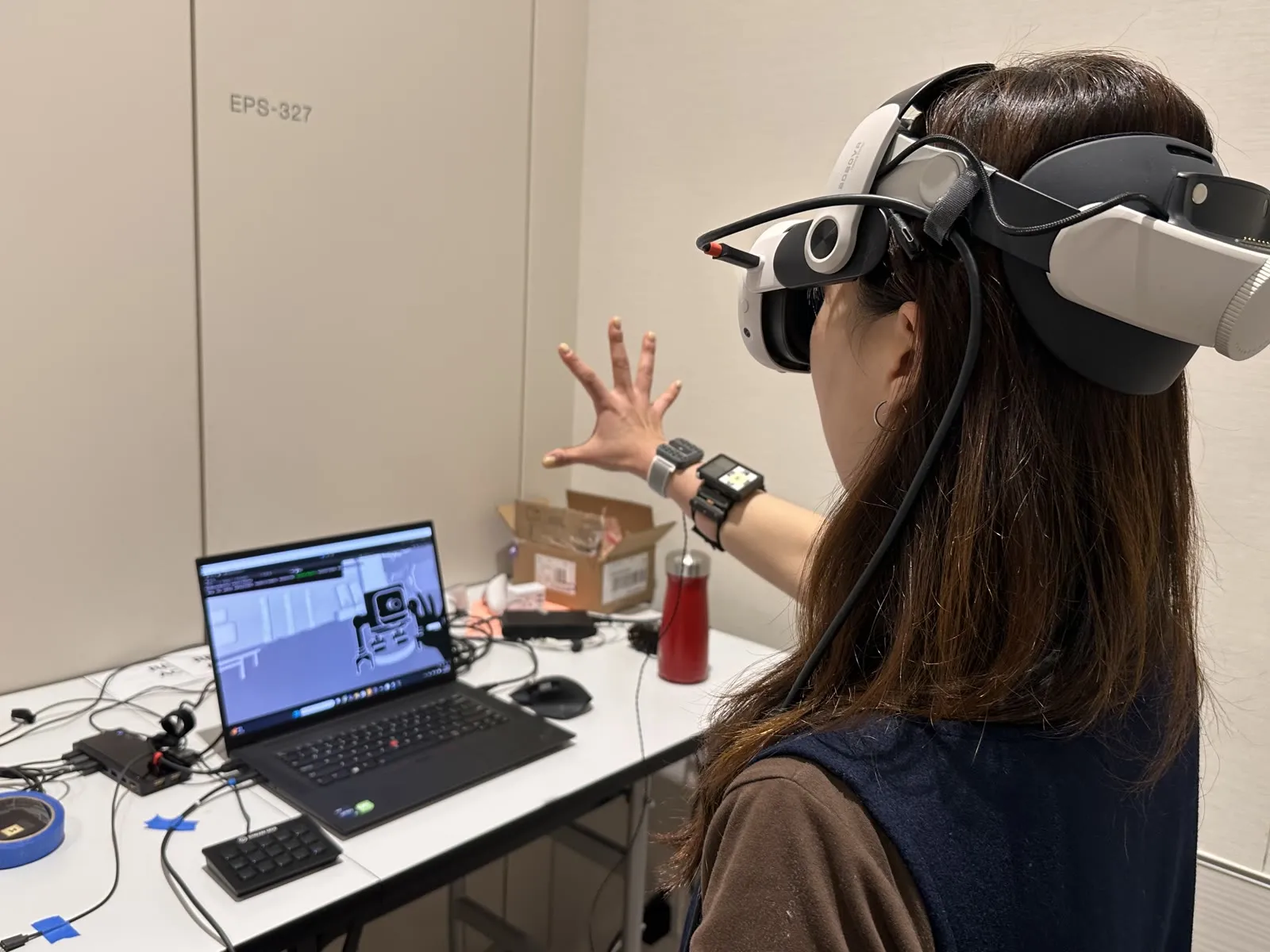
Enabling Immersive, Fantastical Interactions in Virtual Reality Using EMG and Haptics — CHI 2025
A prototype pairing EMG force input with haptic feedback in VR was accepted to a Sensorimotor Devices workshop while it was still an early build.
I rebuilt it end to end into a stable, polished gameplay loop suitable for public demonstration, then presented it in Yokohama.
Explorations of Wrist Haptic Feedback for AR/VR Interactions with Tasbi — UIST 2022
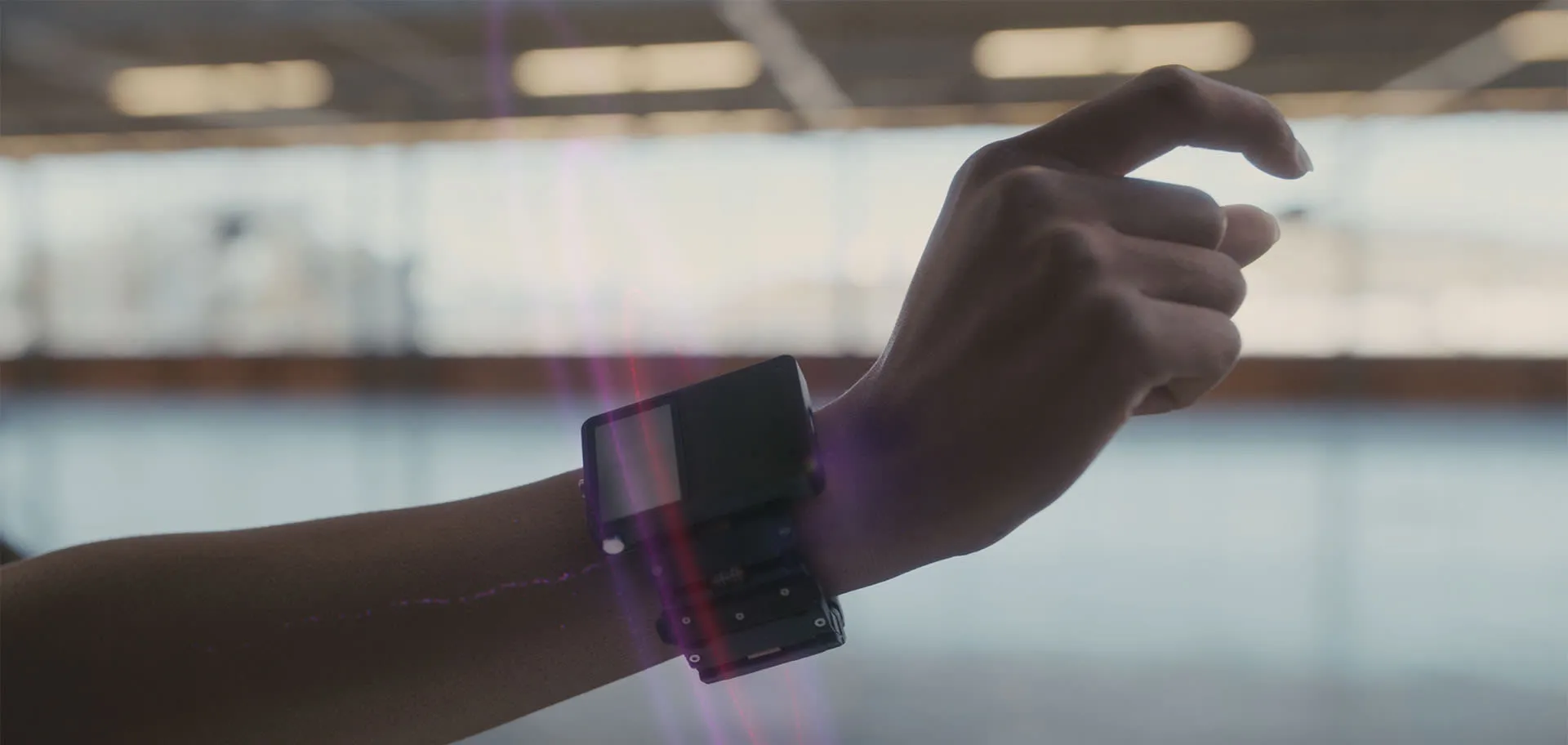
A research scientist built a novel haptic wristband and an accompanying demo showing how squeeze and vibration at the wrist can stand in for touch feedback.
I collaborated to expand the demo’s backend to support other devices and co-presented the work at UIST.
areas of focus
glove haptics
Haptic gloves cover the whole hand in actuators, providing rich feedback to make virtual objects feel tangible.
wristband haptics
Multimodal haptics at the wrist can act as proxies for fingertip feedback, providing a low-encumbrance alternative to a full glove.
gesture interactions
An AI assistant that’s always available needs an input method to match. Micro-gestures sensed at the finger offer discreet, hands-free control, without reaching for a screen or speaking a command.
robotics
Teleoperation strips away the physical feedback an operator would normally get from their hands, such as weight, contact, and slip. Haptics restore some of that to give a clearer sense of what the robot is handling.
outcomes
- — Built 15+ demos over four years, spanning quick value tests, user studies, and polished builds for executive review
- — Took two projects to conference audiences: wrist haptics with Tasbi at UIST 2022, and an EMG + haptics VR demo at the Sensorimotor Devices workshop, CHI 2025
- — Developed shared haptic tooling and taught workshops that raised prototyping literacy across the team and its product partners
- — Standardized how haptic demos were archived and shared, putting the work in front of hundreds of people over time
- — Managed a team of seven through an exploratory sprint and hackathon that produced 25+ prototypes
- — Contributed prototype insights to the requirements for four research hardware iterations
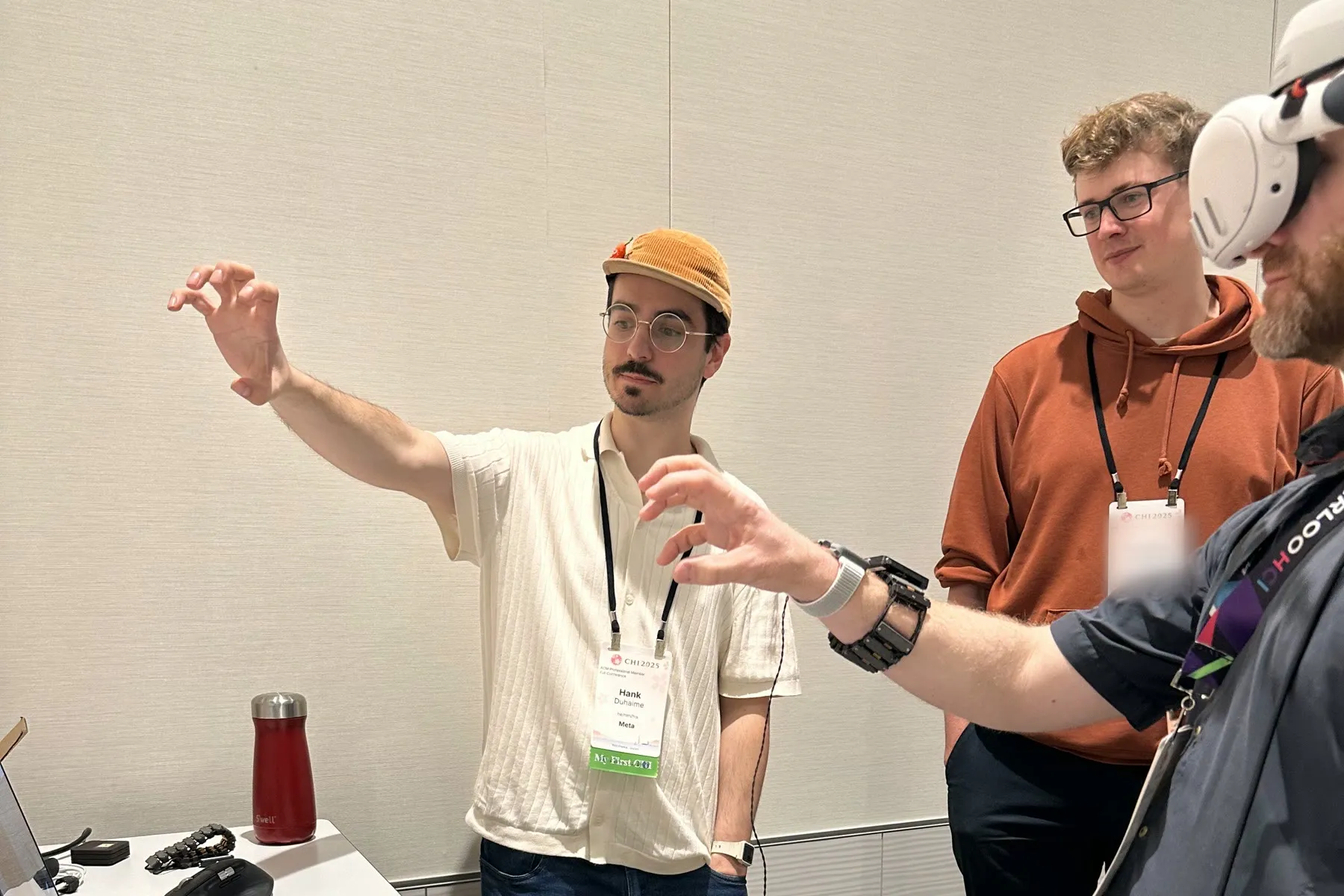
Hank showed his excellence in quickly jumping into new technical problem spaces across different partners as projects and focus pivoted. This is a different kind of prototyper excellence than we usually see in research, where [we] typically celebrate depth on a single subject area.
[He] consistently delivered polished, stable, and usable prototypes, including the EMG + Haptics CHI demo… Hank’s work elevated product experience and set a high standard for technical and design quality.
Credits
- Hank Duhaime - Prototyping & Interaction Design
- Reality Labs Research - Dozens of talented researchers, designers, and engineers trying to make the future a better place
